How to Transfer into UT Austin ECE
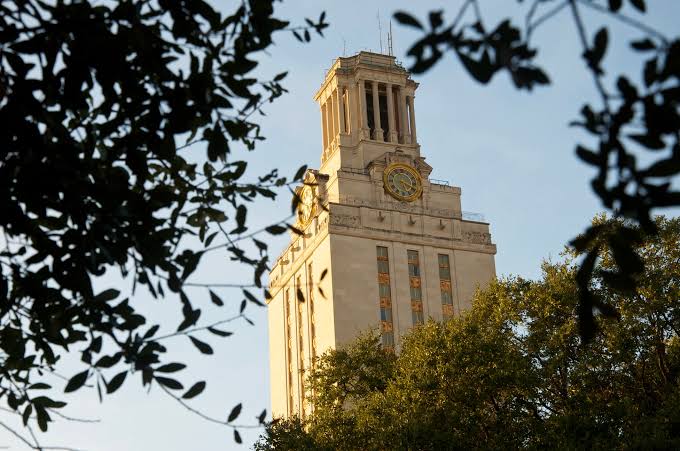
When I started looking into how to maximize my chances as a transfer student majoring in engineering, I was faced with the harsh reality that there is next to no actionable information out there for this demographic. Now that I am an admitted student who has been through the fire, I figured I'd fill the gap. It's worth noting that most of the info here applies to other top engineering schools, but this guide is written with specifically UT ECE in mind.
GPA is King
If you look at the spreadsheets for admitted/rejected students compiled by r/UTAdmissions, you'll see that engineering transfers as a whole rarely get in with below a 3.8, and to my knowledge there wasn't a single ECE student who got in during the 25-26 cycle with below a 3.87. If you plan on transferring after 1 year, base your schedule around filling the necessary prereqs and the rest of your classes should be whichever ones are the most likely to get you closest to a 4.00 overall. An A in an easy class is so much better looking than a C in an honors/hard class.
It's worth noting, however, that your technical GPA is recalculated by UT admissions, which is then prioritized over your overall GPA. So a B in English matters far less than a B in Calculus. This is important to know, as there will be points when you need to make a conscious choice of time commitment, and that choice should always lean towards your technical classes.
If you're not sure about your GPA, you can take my free assessment and I'll personally let you know where you stand.
Prerequisite Coursework
For engineering @ UT, you are required to have (by the end of your 2nd semester, usually the spring semester that you're submitting in) 4 STEM classes, 3 of which are already filled up by Calculus 1 + 2 and Physics 1. So, in practice you only need 1 extra (ideally easy) STEM class on your schedule.
| Course | UT Equivalent | Notes |
| Calc 1 + 2 | Up to M408D | Ensure your school's calc sequence is at most 3 semesters long. |
| Physics 1 (lab needed) | PHY303K | You need the lab here - if your school doesn't offer it by default (like mine). |
| Extra technical class | Varies | Often smarter to take an easy class to pad technical GPA. |
If you're coming from an in-state (Texas) college, all of your transfer equivalency stuff is available at https://admissions.utexas.edu/apply/transfer-students/transfer-credit-resources/. If you're coming from an out-of-state university like I was, it's okay to use your better judgement on if your classes will transfer (e.g. you've taken up to calc 2, you will have credit for calc 2 at UT) - if you're still worried you can email UT, but from my experience they're very vague and don't give much information with any substance.
The Timeline
This is the general timeline my transfer followed - by no means do you need to do the exact same, but the skeleton is good enough to get a general idea of what should be done by when.
- Before semester 1: Map out a general class schedule for both sem 1 & 2, ensuring you'll meet the basic requirements of UT's ECE program beforehand so you don't end up scrambling to get a physics lab like I did.
- Aug/Sept: Get involved. This means going to more or less EVERY club meeting you're interested in, finding which ones are looking for exec positions, applying, and continuing to show up. I would recommend going for 2 exec positions (like officer of a general engineering society, and if you can't get engineering specific that's okay - these roles are about showing leadership) and 2 competition teams where you feel you can make meaningful contributions. Usually the ideal competition team is not something like formula SAE, where the hierarchy of command is very established and it's very hard to get hands on.
- After sem 1, before sem 2: Start looking into research - you want to have meetings with professors scheduled for when you get back to school. During this time you can also start studying for 2nd semester of classes, as UT does consider spring grades (which is why decisions come out so late).
- Submit application by March 1st, 11:59pm: Do not miss this deadline.
- After submitting (March-May): Everything mentioned above is the timeline for getting into your roles - the goal now is staying as close to a 4.00 as possible, as you will (ideally) end up with ~4 clubs/competition teams and a research position, which makes it easy to slip on grades.
- Decisions released (May/June): Varies year-year and from student-student, but the latest this will be June 30th, and the earliest you can expect is May 15th.
The Application
You will still submit through CommonApp/ApplyTexas (doesn't make a difference, both go to the same place). The application opens August 1st, and the deadline is March 1st the following year. The reason it's due so late is because UT will consider spring grades, which results in decisions often coming out in mid-late June.
You will submit:
- All of your demographic info (same as freshman application)
- Your essay
- Transcripts from both semesters of college - you'll submit in progress during March, then final transcripts when your semester ends
- The required resume - this was optional during freshman admissions, it's required for transfers
- The activity section - will look almost identical to your resume, fill it out anyways and list anything you couldn't fit on the resume
- Official transcripts from all colleges attended - this includes dual-enrollment/OnRamps/summer classes in high school
A few things that I got confused about:
- If you grew up/went to high school in Texas, you are still a Texas resident. It doesn't matter where you went to college, if you have established a home in Texas you are a resident - it is nearly impossible to get in as an out-of-state transfer, so ensure you get this right
- There is really nothing to do after March besides keeping your 4.00; to go from the stress of trying to finish your application to not having much to do besides think about said application is a big drop off in required effort, and that's okay. Use the free time you have now to keep a 4.00 during spring, as it could be the deciding factor for the committee in June.
If you'd rather not guess at any of this: I work with a small number of engineering transfer applicants each cycle on exactly this process - schedule mapping, essays, and application review. More about that here.
The Essay
UT is straightforward with their essay prompt: "This essay should address your interest and preparation for the major you’ve chosen as your first choice" - you are meant to talk about why you want to do your major at UT and why they should let you.
The way your transfer essay should differ from one for freshman applicants is that you need to talk about what UT offers that your current school doesn't - if you're at a community college this is easy, however coming from a 4-year isn't too much harder. If you can't pinpoint a specific reason for transferring, my recommendation is to go to UT's faculty directory for the subfield of ECE you're most interested in, find a professor with a paper you're interested in, and include a paragraph about their work and a few UT specific clubs you want to join (for example I wrote about a BioECE lab and the VEX AI team).
You should be sure to avoid talking bad about your current school too much; it comes off as negative, and UT isn't interested in why your current school is a bad fit, they're interested in why you would fit perfectly at UT.
Internal vs. External Transfer
These are two different applications with different requirements, and confusing them wastes time & effort.
Internal transfer applies if you are already a UT Austin student in another college or major. This path is a higher acceptance rate on paper, which leads you down the train of thought that it's easier to get into UT via applying for an easier major then transferring into ECE - however, I would advise against this. If you end up at UT in a major you don't intend on graduating in & get denied to ECE, there is not much you can do. You shouldn't risk messing up your career path in this manner.
External transfer applies if you are coming from another institution. This is what I was, and it's who this guide is largely written for. You're at a college, and for whatever reason want to transfer to UT - you're a prospective external transfer student.
FAQ
Can you transfer into UT ECE with a below average GPA?
Technically, the stated minimum GPA requirement to transfer is 3.00 - but in reality I would put the bare minimum at 3.7. Even then, you'll need to make up for that "bad" GPA with the rest of your application. UT ECE is extremely competitive - even more so for external transfers - and a near-perfect GPA is the ticket to getting your application read, not to getting in.
How many students actually get in?
During my orientation my advisor said 30 got in the year I got in, which she said was higher than usual. From what I've seen during previous cycles, the average is 25, plus-or-minus 10. This equates to about a 1-4% acceptance rate, almost all of which are in-state.
Does it matter which college you transfer from?
Not really - I would estimate a third of transfers are from CAP schools, a third from community college, and the last third from other 4-year institutions. It does matter what your Texas residency status is - as far as I know, no one got into Cockrell out-of-state during the cycle I applied.
That's Everything I Wish I'd Known.
If you are interested in getting 1 on 1 advising with me, feel free to take my free assessment, and I'll help you build out your profile based on the schools you're applying for and where you currently stand.
If you'd rather just email me, I'm always available at iansendelbach@gmail.com, and respond within 48 hours.